_________________________________________________________________________________________

“Carpe diem! Rejoice while you are alive; enjoy the day; live life to the fullest; make the most of what you have. It is later than you think.”

__________________________________________________________________________________________________

Showing posts with label history. Show all posts

Friday, September 14, 2012

It happened today

1716 - 1st lighthouse in US lit (Boston Harbor)

Boston Light is a lighthouse located on Little Brewster Island in outer Boston Harbor, Massachusetts. The first lighthouse to be built on the site dates back to 1716, and was the first lighthouse to be built in what is now the United States. The current lighthouse dates from 1783, is the second oldest working lighthouse in the US (after Sandy Hook Lighthouse in New Jersey), and was the only lighthouse to still be actively staffed by the United States Coast Guard, being automated in 1998 though there are still volunteer keepers acting as tour guides]. The structure was designated a National Historic Landmark in 1964.[5]

 http://en.wikipedia.org/wiki/Boston_Light

File:Karl Bodmer Travels in America (1).jpg
             Check out this 1839 painting. Yes, that's the Boston Lighthouse in the background.


  Around 1916.


Boston Light.jpg

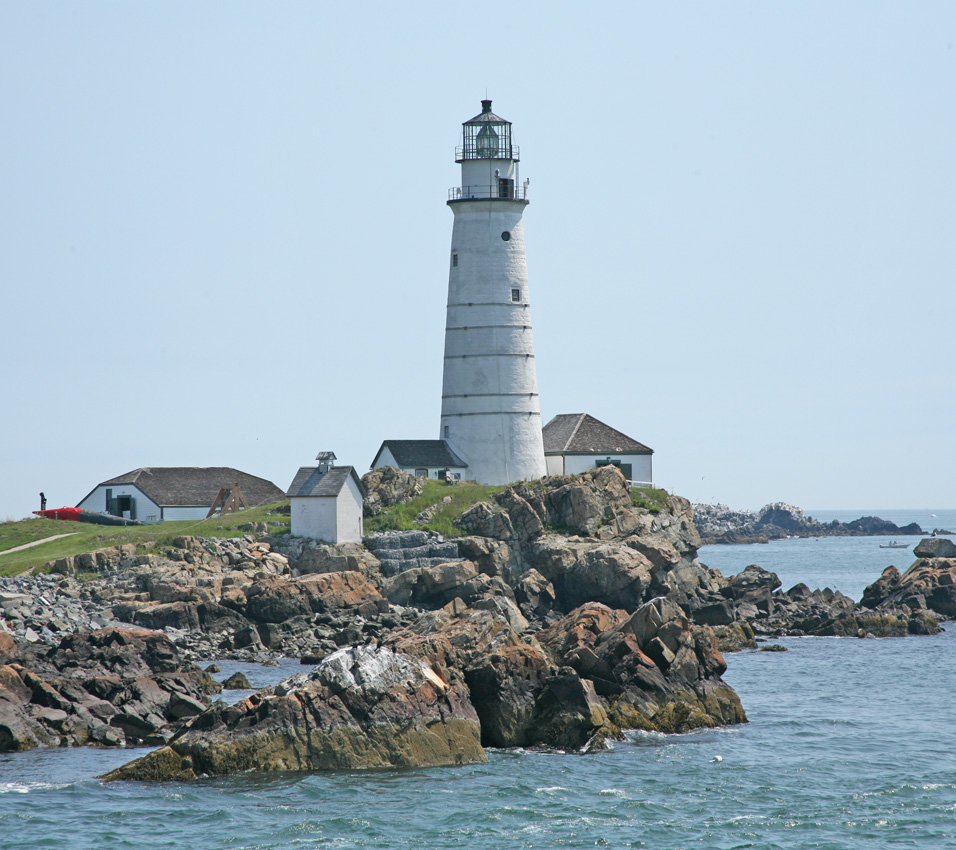
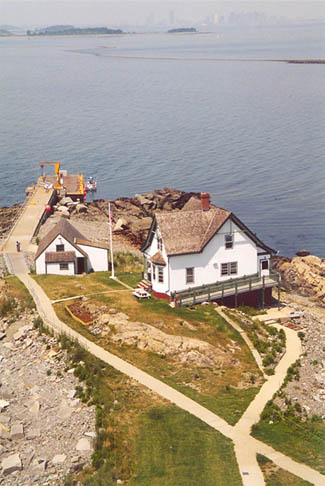
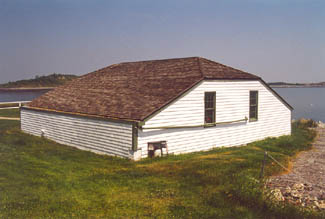
Description: Rising 89 feet above the rocky south side of Little Brewster Island, the white tapering tower of Boston Light deserves its description as the “ideal American Lighthouse.” Flanked by a white clapboard keeper’s dwelling, a picturesque oil house and a fog signal building, Boston Light stands sentinel over one of the oldest and most important harbors on the Eastern Seaboard. Its appearance, however, is only part of its charm, for its story reads like a Who’s Who of American History.

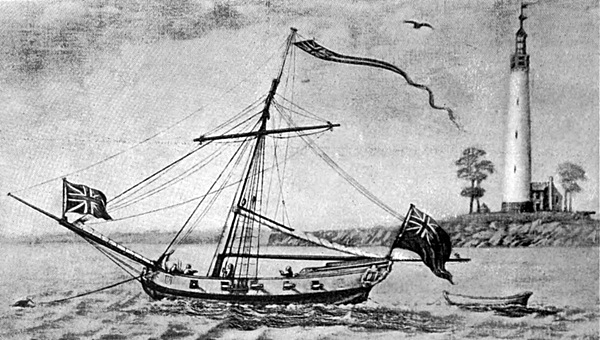
Engraving showing original Boston Lighthouse
As early at 1675, settlers lit bonfires on a hill overlooking Boston Harbor as an aid to navigation, but it wasn’t until 1715 that the Colony of Massachusetts Bay spent almost 2400 British pounds to construct a light tower, the first in the New World. When on September 14, 1716, the beacon from Little Brewster Island pierced the night sky overlooking Boston Harbor for the first time, there were only 70 lighthouses in existence in the whole world. However, both the tower and its first two keepers met violent ends. The first keeper, George Worthylake, lived on Little Brewster Island with his wife and two daughters, Ruth and Ann, and their slave Shadwell. On Nov. 3, 1718, Worthylake and his wife and daughter Ruth were returning from an excursion to Boston. Accompanied by a friend, John Edge, they anchored their sloop near Little Brewster, and Shadwell paddled out in a canoe to bring the party to shore. Worthylake’s younger daughter, Ana, and her friend were watching their progress from the island when suddenly the overloaded canoe capsized and the members of the party were left struggling in the water. The two girls watched, horrified, as one by one each person sank beneath the water and drowned. The tragedy shook the people of Boston. A young Benjamin Franklin wrote a poem about it entitled “The Lighthouse Tragedy” and sold copies of it on the streets. Soon a second keeper, Robert Sanders, took over, but he also drowned only a few days after accepting the position.
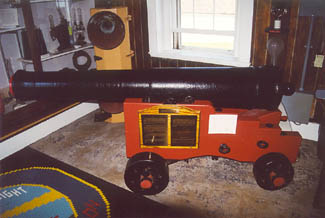
Fortunately the third keeper, John Hayes, survived long enough to make two significant improvements: he requested a gallery be built around the tower’s lantern room so he could keep the glass free of ice and snow, and he requested some sort of a gun “to answer Ships in a Fogg”. In 1719, America’s first fog signal— a cannon—was installed on the island where it remained until the early 1960’s, when it was moved to the Coast Guard Academy. In 1993, it was brought back to the island, where it is on display. Today in heavy fog a siren blasts out twice in rapid succession once a minute.
Buy at Art.com
Buy poster at Art.com
By the 1770’s, Boston Light had successfully guided thousands of ships into the Boston wharves. The prosperity that resulted from the trade was part of the prosperity the British felt should be funneled to the Mother Country via taxation. The penny-a-pound tax on tea was the final straw for the colonial businessmen, who responded by hosting an invitation-only costume party at the harbor. On December 16, 1773, members of the Sons of Liberty, dressed rather unconvincingly as Mohawk Indians, boarded the vessels of the East Indian Company and dumped 342 chests of tea into the harbor. The British responded by blockading the harbor. Boston Light, which had previously been maintained by taxes levied on British ships, now was being maintained by British troops. Not about to take the blockade lying down, early in July 1775 the Minutemen dispatched a small group to Little Brewster Island, where they removed the lantern and oil and set fire to the wooden parts of the tower. An observer on the mainland described “flames of the lighthouse ascending up to Heaven, like grateful incense”. Confused and distracted by the flames, the British gunners tried to blast the Minuteman out of the water but ended up wasting their powder.
The damage to the lighthouse, though a grand gesture, was not a permanent or even very severe one, and the British soon sent repairmen. General Washington knew that the colonials could not allow the British to relight the tower, so he sent a second raiding party, this time 300 soldiers under the command of Major Benjamin Tupper. Arriving in the middle of the night on July 31, the Americans had the element of surprise and the aid of darkness. They quickly defeated the unprepared redcoats, destroyed all the work that had been completed by British carpenters, and set fire to everything that would burn.
The raid would have been an unqualified success except that by then the tide had gone out, leaving the whaleboats they had used for transportation stranded on the beach. Major Tupper knew they had no time to waste before British reinforcements arrived, and ordered his men to push the boats with all their might back into the water. By the time they were again afloat, the British fleet had descended and would have defeated them had not an American artillery piece on nearby Nantasket Head opened fire. The trusty Minutemen lost only one member of their company, while the British suffered heavy casualties. General Washington praised the men as “gallant and soldier-like.”

Boston Lighthouse circa 1916.
Although the colonials had removed the light from the harbor, they had not removed the British. Enraged by the continued British occupation of the harbor, Samuel Adams devised a scheme to drive away the blockaders. On June 13, 1776, American troops armed with cannons headed for Nantasket Head and other strategic islands in the harbor. The next morning the British fleet awoke to a fiery assault that soon drove them back to the high seas. However, before abandoning Boston Harbor, one of the ships put a small party ashore on Little Brewster Island, where they attached a slow-burning fuse to a keg of gunpowder. The blast destroyed the remains of the lighthouse.
In 1780, Massachusetts Governor John Hancock asked the legislature to fund a new tower. By 1783 the new 75-foot tower, designed “to be nearly of the same dimensions of the former lighthouse” was lit, and Little Brewster Island once again served as an aid to the many ships entering and leaving the harbor.
The Commonwealth of Massachusetts ceded the lighthouse to the Federal Government in 1789. After several large cracks appeared in the structure in 1809, six heavy iron bands, three of which are now visible, were secured around the tower. In 1844 a spiral iron staircase was added, and in 1859 the tower’s height was increased from 75 feet to 89 feet. The tower remains virtually unchanged in appearance, but the changes in illumination mirror the development of lighting devices over the years.
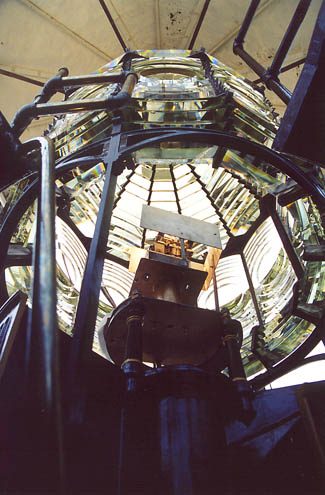
Initially the tower housed oil lamps; sixteen lamps were in place in 1789 when the Federal Government took possession. In 1811, the more effective Argand lamps, mounted on a rotating case, replaced the old oil lamps. When the tower was raised to 89 feet, it was also refitted with a 12-sided second-order Fresnel lens.
Fortunately the lighthouse that had faced such drama during the early days of the American Revolution was too far north to suffer damage during the Civil War. It was not immune to succeeding conflicts, however. During both the War of 1812 and World War I, the light was dimmed so as not to be of use to enemy ships, and from 1941 to July of 1945 Boston Light was extinguished altogether.
In 1948, Boston Light was electrified, and by 1989 every lighthouse in the United States had been automated except Boston Light. Perhaps fittingly, the first lighthouse on American shores was the last to succumb to modernization. With the combined efforts of preservation groups and Massachusetts Senator Edward M. Kennedy, funds were appropriated to keep Coast Guard staff at Little Brewster Island and turn the lighthouse into a living museum of lighthouse history. Boston Light did become automated on April 16, 1998, but Coast Guard crew still perform keeper duties. The two million-candle power light, visible for sixteen miles, can be seen shining twenty-four hours a day as a reminder of the inextinguishable American spirit.

http://www.lighthousefriends.com/light.asp?ID=473


Imagine finding something like this under your house!!! Amazing!!

Ancient Mayan mural found in family’s kitchen

 
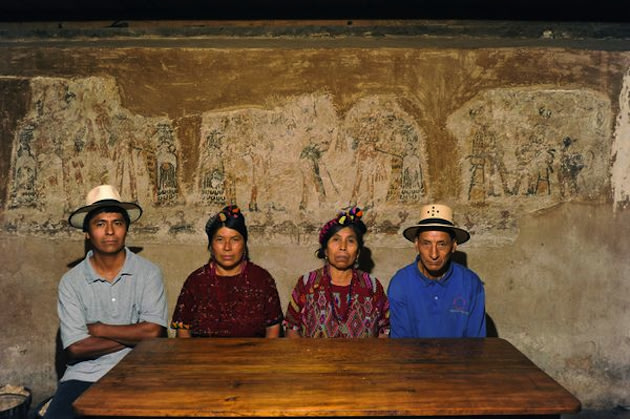
The Ramírez family sits in front of the Mayan mural discovered inside its home. (Photo by Robert Slabonski)A family in Guatemala has discovered an ancient Mayan mural on the walls of its home.
National Geographic explains that Lucas Asicona Ramírez made the discovery while renovating his home five years ago in the village of Chajul.

The painting has been uncovered for the first time in centuries, and archaeologists are scrambling to document the images, which are fading quickly after exposure to air and light.
"We don't get a lot of this type of artwork; it's not commonly preserved in the New World," said Boston University archaeologist William Saturno."It'd be neat to see who the folks were who painted on the wall and why."

The painting show figures walking in a procession line, and some of the figures may be holding human hearts. They are also dressed in what appear to be a mix of traditional Mayan and Spanish clothing.


The mural is believed to have been created sometime after the 16th-century Spanish conquest of Guatemala, according to archaeologist Jarosław Źrałka,

Źrałka told National Geographic it has been a long and trying process to get permission to examine homes in the impoverished village. "I think they were afraid of us," he said.

"There's 500 years of history in this town," Saturno added. "See whose [house] it was. It's unlikely to be just Joe Schmo's house—it's probably an important person's house."
A close-up image of the Maya mural discoverd in a Guatemalan home (Photo by Robert Slabonski)


Tuesday, September 11, 2012

September 11th. We'll never forget you.


Fatalities included the following:
  • Everyone aboard the four hijacked planes.[32] Including the hijackers, this includes 76 passengers and 11 crew members aboard American Airlines Flight 11; 49 passengers and 11 crew members aboard United Airlines Flight 175;[33] 53 passengers and 6 crew members aboard American Airlines Flight 77; and 33 passengers and 7 crew members aboard United Airlines Flight 93.[34][35]
  • 2,606 in New York City in the towers and on the ground:[2]
    • This includes 343 New York City Fire Department firefighters, including one FDNY Fire Chaplain, Franciscan Fr. Mychal Judge,[36] 23 New York City Police Department officers, and 37 Port Authority Police Department officers.[37] Casualties of the 9/11 attacks also included 15 EMTs[38] and 3 Court Officers. Approximately 2,000 first responders were also injured in the attacks.[38]
    • 1,366 people died who were at or above the floors of impact in the North Tower (1 WTC); according to the Commission Report, hundreds were killed instantly by the impact while the rest were trapped and died after the tower collapsed (though a few people were pulled from the rubble, none of them were from above the impact zone).[39]
    • As many as 600 people were killed instantly or trapped at or above the floors of impact in the South Tower (2 WTC). Only about 18 managed to escape in time from above and in the impact zone and out of the South Tower before it collapsed.
    • About 292 people were killed at street level by burning debris and falling bodies of those who had jumped from the World Trade Center's windows.
    • Of those who worked below the impact zones, 110 were among those killed in the attacks. The 9/11 Commission notes that this fact strongly indicates that evacuation below the impact zones was a success, allowing most to safely evacuate before the collapse of the World Trade Center.[40]
    • A USA Today report estimated that approximately 200 people perished inside the elevators, while only 21 escaped the elevators. Many elevators did not plunge, but were destroyed due to the crash and subsequent fires, or were stranded in the shafts. A locking mechanism prevented escapees and rescuers, with the exception of one elevator, from opening the doors of some of the stranded elevators.[41]
    • A bomb sniffing dog named Sirius[42] (not included in above total).
  • 125 in the Pentagon[3]

http://en.wikipedia.org/wiki/Casualties_of_the_September_11_attacks

Monday, September 10, 2012

Today in history...

About 500 years BEFORE Hitler...

In 1349 Jews who survived a massacre in Constance Germany are burned to death


In 1897 - Lattimer Massacre - a sheriff's posse kills twenty unarmed immigrant miners in Pennsylvania, United States.


In 1933 - 1st Negro League All-Star Game, West beats East 11-7 (Comiskey Park)


In  1939 - In WW II, Canada declared war on Germany


In  1945 - Mike the Headless Chicken is decapitated; he survives for another 18 months before choking to death.


In  1953 - Swanson sells it's 1st "TV dinner"


In  1963 - 20 black students entered public schools in Alabama


In  1918 - Rin Tin Tin, German shepherd dog is born! (He died 1932)


Sunday, July 22, 2012

This day in history

1893 - Katharine Lee Bates writes "America the Beautiful," in Colorado


1926 - 105°F (41°C), Waterbury, Connecticut (state record)
1926 - 108°F (42°C), Troy, NY (state record)

 1967 - Jimi Hendrix quits as opening act of the Monkees' tour


This day in history

1775 - George Washington takes command of US troops

 First US President George Washington

This day in history

2010 - The Stonehenge World Heritage Site announces the discovery of a possible new henge, the biggest discovery at a major monument in over 50 years

 ~~~~~~~~~~~~~~~~~~~~~~~~~~~~~~~~~~~~~~~~~~~~~~~


 Picture of what a second henge near Stonehenge might have looked like.
Evidence of a timber henge, shown in an artist's reconstruction, has been found near Stonehenge.
Illustration courtesy University of Birmingham
Magnetometry picture of Stonehenge's newest sister circle.
Magnetometry reading of underground pits near Stonehenge. Image courtesy University of Birmingham.
James Owen in London
Published July 23, 2010

Britain's Stonehenge once had a long-lost twin just a stone's throw away from the prehistoric monument, archaeologists announced Thursday. (See pictures of the new Stonehenge discovery.)

The discovery, made completely without digging, suggests that now solitary Stonehenge may have been surrounded by "satellite Stonehenges," archaeologists say. 

"This finding is remarkable," said survey-team leader Vince Gaffney, an archaeologist the University of Birmingham in the U.K. "It will completely change the way we think about the landscape around Stonehenge."
Using the latest geophysical imaging technology, Gaffney's team captured digital impressions of the now buried remains of the newfound henge formation, just over half a mile (900 meters) from its world-famous neighbor.
Measuring 82 feet (25 meters) wide, the circular feature had a segmented ditch dotted with 20 or so large holes—suspected to have been postholes for a timber, rather than stone, circle, the team says. (Also see "Wooden 'Stonehenge' Emerges From Prehistoric Ohio.")

The circle's estimated date of 2,500 to 2,200 B.C. suggests "it was operating when Stonehenge was in its final and most dramatic form," Gaffney told National Geographic News (interactive Stonehenge time line).

Currently the leading view is that the immediate area around Stonehenge was a sacred, off-limits area where only a select few, such as high priests or nobility, were allowed. (See "Stonehenge 'Hedge' Found, Shielded Secret Rituals?")

"If [the newfound henge] was there at the same time, it demonstrates there was massively more activity going on in the landscape adjacent to Stonehenge," Gaffney said.

That isn't to say Stonehenge was open to anybody, he added, "but we are saying there seems to be more activity inside that boundary.

"Stonehenge," he added, "is one of the most studied monuments on Earth but this demonstrates that there is still much more to be found."


Stonehenge and Sister Circle Linked to Solstice
The team suggests the supposed wooden henge, like Stonehenge, performed an important ceremonial role for ancient Britons who gathered at the summer and winter solstices to mark the passing year with sacred rituals.
Also like Stonehenge, the now vanished henge is oriented toward the solstice sunrise with entrances to the northeast and southwest.

"This new monument is part of a growing body of evidence which shows how important the summer and winter solstices were to the ancient peoples who built Stonehenge," said Amanda Chadburn, as archaeologist with English Heritage, the government agency that manages the Stonehenge World Heritage site.

More Stonehenge Circles to Be Found?
The suspected new henge—or ring-shaped mound with an adjacent ditch—adds to a growing number of stone and timber circles found in the area.

One of the best known Stonehenge sisters, Woodhenge, was discovered in 1925 and lies about 2 miles (3.2 kilometers) from Stonehenge. In 2009 the remains of a 33-foot-wide (10-meter-wide) circle of 25 stones, dubbed Bluestonehenge, was uncovered just over a mile (1.6 kilometers) from Stonehenge.

An English Heritage geophysical survey last year uncovered another Stonehenge-area circle, though it hasn't yet been revealed to the public, according to Joshua Pollard, an archaeologist at the University of Bristol.

New Circle May Have Been a Stone Henge—Not Timber
The age and full significance of the latest Stonehenge discovery won't be known until actual digging takes place, according to Pollard, who isn't involved in the new Stonehenge survey.

"The less exciting interpretation is that it's just a peculiar Bronze Age barrow"—a type of burial mound—he said.

Or, if the monument does prove to be an ancient temple, it could be that, like Bluestonehenge, the newfound site held a long-gone stone circle, not a timber one, he added.

Pollard said scattered fragments of bluestone have been found in the same area as the new henge. Prehistoric builders transported bluestone—a collective name for stone not native to the Stonehenge region—more than 155 miles (250 kilometers) from southwestern Wales to the Stonehenge area to build the massive stone circles.

"People have suspected there may have been a stone circle there which no longer survives," he said. "There's an intriguing possibility that what they might have picked up is actually the site of another stone circle."
Survey leader Gaffney doesn't rule out the idea that Stonehenge's smaller twin was also made of stone. But he said he would expect the pit holes and surrounding ground to look more disturbed if they had held stones that were later dragged out or broken up.

"To me they look like timbers which have rotted in situ," he said.


Swifter Surveys at Stonehenge
For this first ever systematic geophysical survey of the area surrounding Stonehenge, the survey team employed a new, faster method of surveying beneath the ground using a combination of radar imaging and magnetometry, a technique that maps changing patterns of magnetism in the soil.

The new henge was found in just the first two weeks of a three-year project to map 5.5 square miles (14 square kilometers) of the Stonehenge landscape.

Assuming the find wasn't a fluke, the team's swift success hints that such circles may have been fairly common around Stonehenge.

"If we do have a number of small timber and stone circles in that landscape—which on current evidence is looking quite likely—then I suspect the survey will pick them up," the University of Bristol's Pollard said.
"We could be looking at a very different perception of the kinds of monuments within the Stonehenge area than we have at present," he added.

In fact, survey leader Gaffney said he expects other monuments to turn up, sites that, like the newfound henge but unlike other known circles, are visible from Stonehenge.

Archaeologist Andrew Fitzpatrick, who wasn't part of the survey, said such prehistoric sites are easily missed, having been "ploughed flat over many thousands of years."

Given the survey team's almost immediate success, added Fitzpatrick, of the nonprofit consulting group Wessex Archaeology, "we should expect many more exciting discoveries as the project continues."


 http://news.nationalgeographic.com/news/2010/07/photogalleries/100723-stonehenge-woodhenge-twin-timber-circle-science-pictures/

Saturday, July 21, 2012

This day in history

2010 - Facebook CEO Mark Zuckerberg announces that 500 million people all around the world are actively using Facebook.

American Indians Remember the Massacre at Wounded Knee Whenever Mass Murders Take Place

Levi Rickert, editor-in-chief in Native Condition.

Friday morning America woke up to learn about yet another horrific act of violence. This time we woke up and discovered 12 people were killed and dozens more wounded in a cinema. It was one more venue disturbed by violence.
American Indians Remember the Massacre at Wounded Knee 
Chief Big Foot and His People Frozen in Our Memory
 
The footage coming out of Aurora, Colorado reminded me quickly of Columbine, not far from Aurora.
By 11 pm Friday night, CNN's Don Lemon was calling the incident the deadliest massacre in American history.

I was trying to write for today's edition, but that erroneous statement made me pause for a moment to think:
He must not remember Wounded Knee where some 150 Lakota men, women and children were massacred by the US Calvary. We, American Indians do!

Of course, American Indian history is not really part of required curricular, so I guess Mr. Lemon never learned about Wounded Knee. I always remember Wounded Knee whenever there are mass killings, especially when they occur on American soil. Wounded Knee is on American soil.

Without learning American Indian history, the average American never fully understands that the United States is a nation that was built on violence.

To paraphrase the Bible, "we are reaping what we have sown." And, I am not rejoicing over it, so don't get mad at me.

Personally, I would hope we could move forward as a society free of violence. We may have tougher gun control laws though. We may have to eliminate more automatic weapons - the kind that can spray a magazine full of ammunition in seconds. We may want some computer to keep track of why certain people feel as if they need to build a personal arsenal of deadly weapons with ammunition.

We may have to have more regulation on violent video games. Frankly, I am always amazed at how and why children are taught at an early age it is okay to murder people in video games. The points keep going up as more people are killed by shooting them or blowing them up in these violent games. I find those games appalling.

We may have to learn that terrorism is terrorism whether it is committed by an American citizen or non-American. It seems as Americans, we want a quick assurance that acts - such as what happened in the Aurora cinema - was not an act of terrorism by some anti-American group.

Somehow, we take comfort in the fact we were not attacked by a foreign enemy. It is almost as if the network media talking heads breathe a sigh of relief when it is disclosed by Homeland Security that violent acts were committed by a deranged gunman who acted alone.

Yet, Friday was a sad day in America.

We all need to pray for the families of those who were killed and those who were wounded. We need to pray for peace and all work together for a society free of hatred and violence.

And, all Americans should learn about and remember Wounded Knee.

posted July 21, 2012 9:50 am edt

 http://www.nativenewsnetwork.com/american-indians-remember-the-massacre-at-wounded-knee-whenever-mass-murders-take-place.html

Friday, July 20, 2012

Today in history - First Special Olympics held

On this day, July 20, in 1968 the first International Special Olympics Summer Games were held at Soldier Field in Chicago, Illinois. Eunice brought together a thousand children and adults with intellectual disabilities from 26 U.S. states and Canada to compete in various sporting events.

The event grew out of Eunice’s sponsored “Camp Shriver,” held in her backyard, that gave disabled children from around the area a chance to participate in all the regular summer camp activities. The camp was an instant success, and grew in popularity over the subsequent years, giving Shriver leverage with the Olympic Committee in obtaining their imprimatur on the sports event.


Today in History!!

1881 - Sioux Indian Chief Sitting Bull, surrenders to federal troops


1921 - Congresswoman Alice Mary Robertson became the first woman to preside over the US House of Representatives.


 1927 - Lindbergh begins NY flight (Spirit of St Louis)


Thursday, July 19, 2012

Today in History!!

1860 - 1st railroad reaches Kansas


 1875 - Emma Abbott, a floating hospital for sick kids, makes trial trip, NYC

 1879 - Doc Holliday kills for the first time after a man shoots up his New Mexico saloon.


1880 - SF Public Library starts lending books

 1912 - A meteorite with an estimated mass of 190 kg explodes over the town of Holbrook in Navajo County, Arizona causing approximately 16,000 pieces of debris to rain down on the town.

Today in History!!

 1553 - 15-year-old Lady Jane Grey deposed as England's Queen after 9 days


Lady Jane Grey

From Wikipedia, the free encyclopedia

Lady Jane Grey
The Streatham Portrait, discovered at the beginning of the 21st century and believed to be a copy of a contemporary portrait of Lady Jane Grey.[1]  
Queen of England and Ireland (disputed) (more...)
Reign 10 July 1553 – 19 July 1553[2]
Predecessor Edward VI
Successor Mary I

Spouse Lord Guildford Dudley
Father Henry Grey, 1st Duke of Suffolk
Mother Lady Frances Brandon
Born 1536/1537
Died 12 February 1554 (aged 16–17)
Tower of London, London
Burial St Peter ad Vincula, London
Signature

Lady Jane Grey (married name Lady Jane Dudley; 1536/1537 – 12 February 1554), also known as The Nine Days' Queen,[3] was an English noblewoman and de facto monarch of England from 10 July until 19 July 1553. She was subsequently executed. The great-granddaughter of Henry VII through his younger daughter Mary, Jane was a first cousin once removed of Edward VI.

In May 1553 Jane was married to Lord Guildford Dudley, a younger son of Edward's chief minister, John Dudley, Duke of Northumberland. When the 15-year-old King lay dying in June 1553, he nominated Jane as successor to the Crown in his will, thus subverting the claims of his half-sisters Mary and Elizabeth under the Third Succession Act. During her short reign, Jane resided in the Tower of London. She became a prisoner there when the Privy Council decided to change sides and proclaim Mary as Queen on 19 July 1553. She was convicted of high treason in November 1553, though her life was initially spared. Wyatt's rebellion in January and February 1554 against Queen Mary's plans of a Spanish match led to her execution at the age of 16 or 17, and that of her husband.

Lady Jane Grey had an excellent humanist education and a reputation as one of the most learned young women of her day.[4] A committed Protestant, she was posthumously regarded as not only a political victim but also a martyr.

Wednesday, July 18, 2012

Lemuel Haynes


Lemuel Haynes


Born in West Hartford, Connecticut July 18, 1753. Lemuel Haynes was the son of a black man and a Scotch servant girl, Alice Fitch, who was employed by John Haynes of West Hartford. In Lieu of an orphanage, he was bound out when 5 weeks of age to a Deacon Rose of Granville, MA. Enlisted as a Minute Man in the Colonial Army, 1775; Volunteer in expedition to Ticonderoga, 1776. Supplied, Congregational church, Granville, NY 1780. Ordained, 1785. Pastor, Torrington, Connecticut 1785-1787; Rutland, Vt. 1787-1818. Removed to Manchester, VT, 1818. Pastor, Granville, NY 1822-1833. Author: "Divine Decrees, an Encouragement to the Use of Means" and "Universal Salvation," his response to Hosea Ballou a popular preacher of the day. Lemuel Haynes was married to Elizabeth Babbit, 22 September 1783 at Hartland, Connecticut by Rev. Samuel Woodbridge. She was born 29 February 1763 at Dighton, Massachusetts and died 8 February 1836.


Today in History!!

1743 - 1st half-page newspaper ad is published (NY Weekly Journal)

 1753 - Lemuel Haynes, escapes from slave holder in Framingham Mass


Tuesday, July 17, 2012

Today in History!!

 1585 - English secret service discovers Anthony Babingtons murder plot against queen Elizabeth I

 Elizabeth I was queen regnant of England and Ireland from 17 November 1558 until her death. Sometimes called The Virgin Queen, Gloriana, or Good Queen Bess, Elizabeth was the fifth and last monarch of the Tudor dynasty.
 English Monarch Queen Elizabeth I


1762 - Catherine II becomes tsar of Russia upon the murder of Peter III of Russia.

 Catherine II, also known as Catherine the Great, Empress of Russia, was the most renowned and the longest-ruling female leader of Russia, reigning from 9 July [O.S. 28 June] 1762 until her death at the age of 67


Monday, July 16, 2012

Today in History!!

1782 - Mozart's opera "Das Entfuhrung aus dem Serail," premieres in Vienna

 1880 - Dr. Emily Stowe becomes the first woman licenced to practice medicine in Canada.

 1920 - China joins the League of Nations

 1926 - National Geographic takes 1st natural-color undersea photos

Today in History!!

1429 - Joan of Arc leads French army in Battle of Orleans
 

 Joan of Arc, nicknamed "The Maid of Orléans", is a folk heroine of France and a Roman Catholic saint


 Joan of Arc was born in 1412 in Domrémy, Bar, France. Believing that she was acting under divine guidance, she led the French army in a momentous victory at Orléans that repulsed an English attempt to conquer France during the Hundred Years' War. Captured a year afterward, Joan was burned by the English and their French collaborators as a heretic. She was canonized as a saint on May 16, 1920.


  • NAME: St Joan of Arc
  • OCCUPATION: Warrior
  • BIRTH DATE: c. 1412
  • DEATH DATE: May 30, 1431
  • PLACE OF BIRTH: Domremy, France

Best Known For

Joan of Arc was a peasant girl who, believing that she was acting under divine guidance, led the French army in a momentous victory at Orlans.


Sunday, July 15, 2012

Today in History!!

1922 - 1st duck-billed platypus publicly exhibited in US, at NY zoo


Platypus


The Platypus (Ormithorhynchus anatinus) is a warm-blooded, egg-laying mammal. They have no visible ears and webbed feet. On land the platypus walks on its knuckles with webbing tucked back. Platypus fur is fine and dense and is in two layers to keep them dry and warm. Besides being a stabilizer when swimming, the platpus tail is used for fat storage—up to 50% of the animal's body fat is in the tail.

They live in and near freshwater streams and lakes. Platypus burrows can be up to 100 feet in length and often have two entrances/exits. Their burrows are above water level with entrances in river or lake banks or under tree roots. There are two types of burrows: nesting and camping—the latter having shorter tunnels of 3 to 13 feet. Platypuses spend about 17 hours a day resting inside their burrows.

The platypus diet consists of freshwater invertebrates (shrimp, worms, pea-shell mussels) and aquatic insects. They also may eat frogs and fish eggs. The platypus mainly hunts at night. They use their bills to locate prey. Their bills have hundreds of receptors which respond to touch and tiny electric currents.

Platypus predators include: large cod, hawks, eagles, owls, and foxes. Carpet pythons, goannas and Australian water-rats attack young platypus in the burrow. Platypus prefer their burrows to be overhung by vegetation which helps hide it from predators. Adults usually have a number of burrows.

Platypus weigh 2.2 to 3.3 pounds and are 1.3 and 1.6 feet long. A platypus can temporarily store food in its cheek pouches. They don’t have teeth when grown but grind their food between pads in their bills.

Fun Platypus Facts
- The platypus bill is rubbery and flexible.
- Males have a sharp hollow spur on their hind ankles. These are venomous. The venom can kill a small animal or incapacitate a human.
- The female platypus lays a clutch of 1 to 3 leathery eggs. She does not have nipples, but instead secretes milk from two round patches of skin midway along her belly.
- In the early 1900's platypuses were hunted for their fur.
- They swim with their eyes, ears and nose shut.
- Platypus belong to the monotreme group, mammals who lay eggs.

 http://www.thejunglestore.com/Platypuses

Today in History!!

1783 - 1st steamboat, Pyroscaphe, 1st run in France


1799 - The Rosetta Stone is found in the Egyptian village of Rosetta by French Captain Pierre-François Bouchard during Napoleon's Egyptian Campaign.


 1815 - Napoleon Bonaparte captured

 French Emperor Napoleon Bonaparte